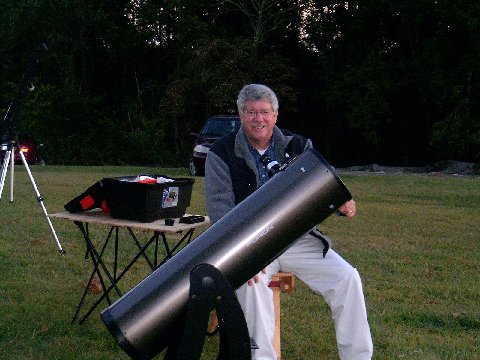

Dr. F. Owen Hoffman, Jr., known to family and friends as Owen
Owen passed away unexpectedly yet peacefully at home in Oak Ridge, Tennessee, on October 23, 2026, due to natural causes. He was 81 years old. Born on December 19, 1944, in San Francisco, California, to Esperanza Jones and Frank O. Hoffman, Sr., he lived a life marked by curiosity, dedication, and an enduring commitment to understanding the natural world and protecting human and environmental health.
What stands out is that Owen wasn’t simply a park ranger or scientist. He was someone who never stopped asking questions about Crater Lake, even decades after working there.
Remembering Dr. F. Owen Hoffman
Park Ranger, Scientist, Researcher, and Friend of Crater Lake
Dr. F. Owen Hoffman spent the summers of 1966 through 1968 as a seasonal ranger-naturalist at Crater Lake National Park. Those three summers helped shape a lifelong fascination with one of America’s most extraordinary natural wonders.
Owen was an accomplished runner at San Jose State College. In 1966, he reportedly ran up the steep Cleetwood Cove Trail in just 7½ minutes. He later recalled jogging the trail in his full wool ranger uniform after completing a day of boat tours.
But Owen’s greatest contributions came through his scientific curiosity.
While working at Crater Lake, he studied the movement of tiny aquatic organisms called zooplankton. His research led to a master’s degree in limnology and ecology from Oregon State University in 1969. He subsequently earned a doctorate and pursued a career as a nuclear scientist and consultant.
Even after leaving the National Park Service, Crater Lake remained close to his heart.
His contributions to understanding Crater Lake
Owen investigated some of the lake’s most fascinating mysteries.
Why does Crater Lake rarely freeze? Owen explained that its enormous volume of water stores heat from the summer sun. Winter winds continually mix the lake, bringing relatively warmer water toward the surface. Only prolonged cold and calm conditions allow ice to form across the lake.
How long did Crater Lake take to fill? In a 1999 article published in Crater Lake Nature Notes, Owen developed a mathematical model examining precipitation, evaporation, underground seepage, and ancient climate changes. He concluded that the lake’s development was considerably more complicated than earlier estimates suggested, with thousands of years required to reach its present condition.
How deep is Crater Lake compared with other lakes? Owen carefully examined the difference between maximum depth and average depth. He argued that Crater Lake’s average depth of approximately 1,148 feet made it the deepest lake in North America by that measurement and among the deepest in the world.
What is the history of the Old Man of the Lake? Owen explored possible explanations for the famous upright floating log. He suggested that changes in lake level might have contributed to its unusual history, while acknowledging that some questions about its origin remained unanswered.
His memories of park life
Owen also preserved wonderful stories about working at Crater Lake during the 1960s.
He remembered the evening ranger programs, the slide presentations at Crater Lake Lodge, and the high standards established by the park’s naturalist staff.
He described the 1967 sinking of an old wooden research boat near Wizard Island, making room for Oregon State University’s Boston Whaler.
He also recalled the dramatic June 1968 rescue of two young men stranded on a ledge above the lake. Owen and fellow researchers were involved in efforts to assist the rescue operation.
These stories reveal another side of Owen: a man who valued his fellow rangers, remembered their adventures, and wanted their history preserved.
A lifelong connection
Owen returned to Crater Lake as a volunteer in 1998, approximately 30 years after his final season as a ranger.
He also served as a director of the Crater Lake Institute and continued corresponding with former rangers, researchers, and park historians.
His writings show a man who cared deeply about scientific accuracy. When he believed a published figure was misleading, he explained why. When evidence was incomplete, he acknowledged the uncertainty. And when someone asked a question, he often responded with a thoughtful, detailed explanation.
Owen Hoffman leaves a legacy of scientific inquiry, friendship, and dedication to Crater Lake National Park. His research helped explain the lake’s mysteries, while his memories helped preserve an important chapter of its history.
One especially meaningful detail is that Owen’s correspondence includes exchanges with you and other former Crater Lake colleagues. These weren’t just scientific papers. They were memories shared among people who had experienced the park together.
