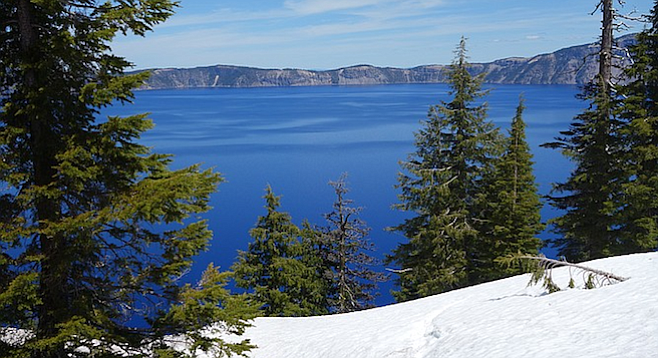

Chemical Analyses of Waters from Crater Lake, Oregon, and Nearby Springs
 |
by J. Michael Thompson, L. Douglas White and Manuel Nathenson
DEPARTMENT OF THE INTERIOR
U.S. GEOLOGICAL SURVEY
345 Middlefield Road
Menlo Park, California 94025
Open-File Report 87-587
1987
Chemical Analyses of Waters from Crater Lake, Oregon, and Nearby Springs
by J. Michael Thompson, L. Douglas White and Manuel Nathenson
Abstract
Crater Lake, Oregon, has no surface outlet and loses its inflow by evaporation and leakage. In order to understand the hydrology of the lake and the leakage of the lake in relation to nearby cold springs, water samples were collected for chemical and isotopic analyses. No spring analyzed had evidence of more than ten percent Crater Lake water. One spring, Crater Spring, has higher than usual chloride concentrations and slightly heavier isotopes than average meteoric water. If these are caused by Crater Lake water, then the calculated fraction of Crater Lake water is near seven percent. Chemical and isotopic analyses show that Crater Lake is well mixed. Crater Lake also has anomalously high chloride, boron, lithium, sulfate, and silica concentrations compared to nearby Diamond Lake and to cold springs discharging on the flanks of Mount Mazama. This elevated chloride may be caused by input of thermal water. Weight ratios of Cl/Li are within the range of western United States hot springs and significantly below those for surrounding cold spring waters. Estimates of total heat flow out of the lake bottom range from 670 to 1380 mW/m2, also suggesting addition of thermal water to the lake bottom.
Introduction
Crater Lake, Oregon, is located in the 6800 year old caldera of Mount Mazama (Bacon, 1983). The lake receives 85 percent of its inflow by direct precipitation with the remainder coming as inflow from the surrounding drainage area. The lake covers 78 percent of its drainage area. The lake has no surface outlet, but loses 72 percent of its inflow by leakage and 28 percent by evaporation (Phillips, 1968). Van Denburgh (1968) recognized that chloride and sulfate and perhaps silica and sodium were anomalously-high in the lake and suggested that these constituents may be contributed by thermal springs at depth in the lake. Based on unpublished analyses, Van Denburgh also suggested that the lake is quite uniform in chemical quality both areally and vertically.
The purpose of this paper is to present chemical and isotopic data for Crater Lake and cold springs emanating on the flanks of Mount Mazama in order to understand questions concerning the lake dynamics and the relationship of the lake water to nearby cold springs. The pertinent questions are: 1) Are the lake chemistry and isotopic composition anomalous compared to-nearby cold springs? 2) If so, are there any springs that show a significant component of Crater Lake water mixed with shallow ground water? 3) How well mixed chemically and isotopically is the water in Crater Lake? and 4) Do the dissolved chemical constituents in Crater Lake water indicate an input of thermal water?
Table 1 contains the complete chemical and isotopic data previously discussed in Thompson and White (1983), Salinas and others (1984), and White and others (1985). These abstracts contained only preliminary answers to the questions posed above. Additionally, inconsistencies in some of the previously reported data have been identified, and the values have been redetermined and are given in Table 1. A complete study of the methods of chloride analysis was also made in order to calculate the accuracy and precision of various methods of analysis.
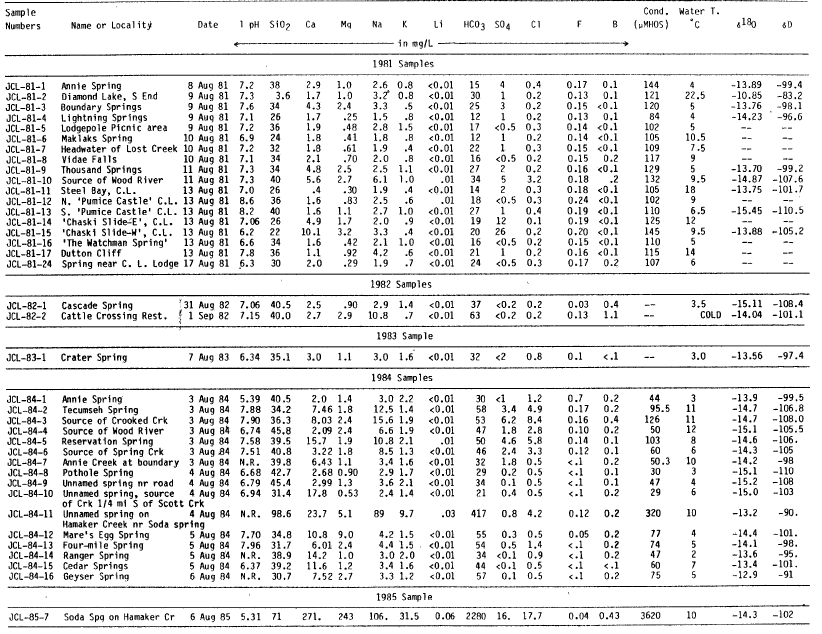 |
| Table la. Chemical Analyses of Springs in the Vicinity of Mount Mazama |
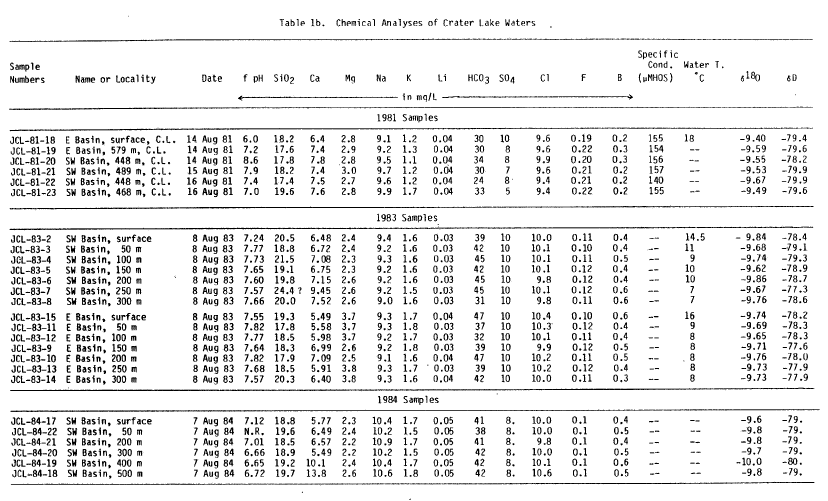 |
| Table 1b. |
Sampling and Analysis
Spring waters were collected using methods similar to those described in Thompson (1975). Temperatures of springs were determined using a conventional, total immersion, mercury-in-glass thermometer. In 1981 and 1982 field measurements of the spring water pH were made with non-bleeding, low-ionic-strength, pH-indicating dyes (E. M. Colorphast pH strips*). Beginning in 1983 all field pH measurements were made with a gel-filled pH electrode and a portable pH meter. Temperature and pH were generally determined at each spring site. The alkalinity of the 1984 and the few 1985 samples was also determined in the field. At each spring site a filtered, unacidified CFU) water sample for anion analysis was collected by passing the water through a 0.45 pm membrane filter. Additionally, a filtered, acidified sample (FA) for cation analysis was collected by adding concentrated, trace-metal quality HCI to the filtered water. An untreated sample for deuterium and oxygen-18 analysis was also collected at each site.
Samples of lake water were collected in 2 liter Van Dorn sample bottles attached to a metal cable and retrieved either by hand (1981 samples) or mechanically (all others). The depth of sampling in 1983 was limited to 300 m by the available cable; in 1984 the winch and cable were replaced, permitting us to retrieve samples from the bottom of the lake. Samples were collected and treated similar to the spring water ones: one bottle for anion analysis, FU, another for cation analysis, FA, and a third for isotopic analysis, untreated. In 1985 a one-liter raw sample was collected and evaporated to approximately 50 mL for B and Li analysis.
Laboratory Analyses
Silica was analyzed at 640 nm by a modification of the molybdenum blue spectrophotometric procedure described by Shapiro and Brannock (1956) using 10 mL of the filtered acidified spring water.
Boron was determined spectrophotometrically using the carmin procedure at 600 nm (Brown and others, 1970).
Bicarbonate was determined titrimetrically as alkalinity using a constant-drive buret, a combination pH glass electrode, a specific ion – pH meter, a strip chart recorder,- and standardized sulfuric acid (0.05N). The laboratory pH was taken as the pH at the start of the alkalinity titration. If bicarbonate was analyzed in the field, the analysis was not repeated in the laboratory.
Sulfate was determined by a turbidimetric procedure using BaCl2 to precipitate BaSO4. The 1983 samples of lake water were determined by ion chromatography (Fishman and Pyen, 1979).
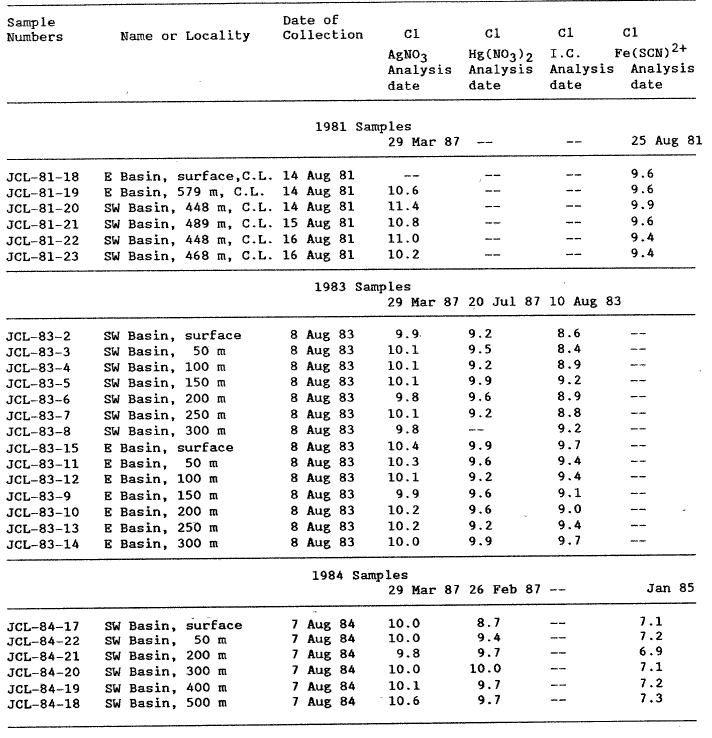
Chloride was determined by four procedures: a) the colorimetric ferric thiocyanate method (Fishman and Friedman, 1985); b) the manual mercurimetric titration procedure (Brown and others, 1970), c) an ion chromatographic procedure using a HCO3 – Co3 eluent and conductivity detection (Dionex model 16), and d) an automated AgNO3 titration (Brinkman, model 682). Results of the various chloride analyses are reported in table 2.
Fluoride was determined by an Orion ion specific electrode; TISAB II was mixed 1:1 with all samples and standards. The 1983 samples were analyzed by ion chromatography (Fishman and Pyen, 1979).
Sodium and lithium were determined simultaneously by flame emission spectroscopy (FES) in a fuel-rich, air-acetylene flame with added potassium ion (0.1 percent v/v) at 589.0 nm and 670.8 nm, respectively.
Potassium was determined by FES in a stoichiometric air-acetylene flame with added cesium ion (0.1 percent v/v) at 766.6 nm.
Calcium and magnesium were determined simultaneously by atomic absorption spectroscopy (AAS) in a stoichiometric air-acetylene flame with added La(III) (1.0 percent v/v) at 422.7 and 285.2 nm, respectively.
Specific Conductance was determined following the procedure described in Brown and others (1970).
Deuterium analyses were made following the procedure of Bigeleisen and others (1952).
Oxygen-18 analyses were made following the procedure of Epstein and Mayeda (1953).
Brand names used are for information purposes only and do not constitute a recommendation by the U.S. Geological Survey.
 |
|
Table 2. Chloride Analyses of Crater Lake Waters (Cone. in mg/L) |
Cold-Spring Waters
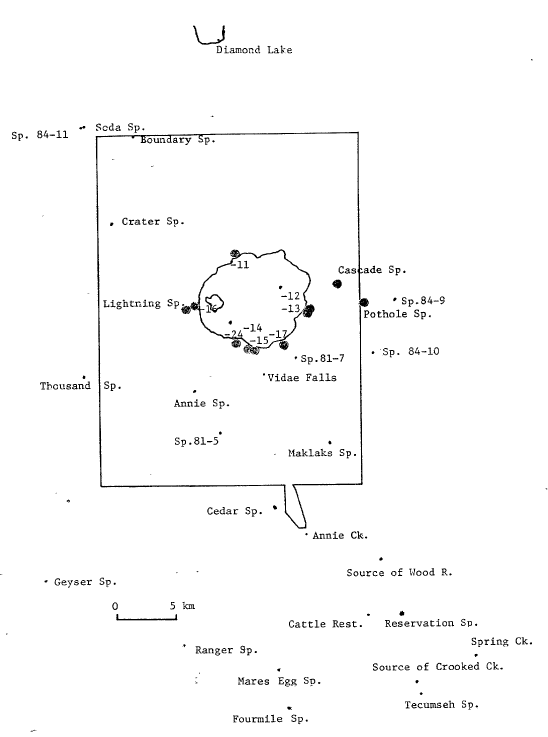
Water samples of cold springs were collected in the Crater Lake area from 1981 through 1985 at the locations shown in figure 1. An effort was made to sample all large discharging springs searching for evidence of Crater Lake water. Major-ion concentrations and water isotopes for cold-spring waters are reported in table la.
The cold spring waters discharging on the flanks on Mount Mazama have low total dissolved solids and are essentially a sodium-calcium-magnesium bicarbonate water (table la). Generally, the waters are neutral to slightly alkaline. The waters contain much less than 10 mg/L of dissolved sulfate and chloride and less than 1 mg/L of dissolved boron and lithium. Fluoride is just above the detection limit (0.1 mg/L). Dissolved silica in the waters is higher than would be expected for quartz solubility control. Quartz is not a common mineral in this area. Aluminosilicates and glassy volcanic rocks may be the source of the SiO2 in the cold-spring waters (C. R. Bacon, oral communication, 1987).
In general, spring waters discharging above the surface elevation of Crater Lake are remarkably similar to those discharging below it. Few chemical differences exist between intracaldera spring water and extracaldera spring water. However, in the vicinity of Chaski Slide, a large piece of hydrothermally altered volcanic rock that failed sometime after the climactic eruption, water passing over the slide material is relatively enriched in calcium and sulfate (Samples JCL 81-14 and 81-15 on figure 1). Not all waters discharging from the caldera walls were analyzed for deuterium and oxygen-18, because samples were not collected at the spring orifice and the effects of evaporation were unknown.
Springs above the lake all have chloride concentrations less than 0.4 mg/L whereas the lake has a chloride concentration of 10 mg/L (figure 2). The chloride concentration in the cold springs is similar to that measured in precipitation in western Oregon (Junge and Werbe, 1958), so that the chloride in the cold springs appears to be that which was in the water as precipitation. Because the lake loses 28 percent of its inflow by evaporation, the chloride concentration of the cold-spring water and direct precipitation into the lake can be raised by evaporation by no more than 40 percent. Thus the chloride concentration in the lake is quite anomalous compared to the available water supply.
Both Crater Lake-and Diamond Lake show the effect of evaporation on their isotopic contents, and they have distinctly different values from cold-spring samples both above and below the surface elevation of Crater Lake (figure 3). The evaporation trend is the empirical slope of five reported by Craig (1961). It is possible to use values for the isotopes to calculate this evaporation trend (e.g. Gonfiantini, 1986); however, there are a number of free parameters that have not been measured that are required to perform such a calculation. Mixing between Crater Lake water and other waters would be along a straight line in this diagram. Based on the isotopes, there is no single cold spring with a significant fraction of Crater Lake water.
When deuterium is compared to chloride for Crater Lake and the cold-spring samples, a few samples show elevated chlorides, but the combination of mixing in the isotope plot of figure 3 and figure 4 permits some of these to be ruled out as containing a large fraction of Crater Lake water. Based solely on Cl and SD, the spring on Hamaker Creek (Spring 84-11 on Figure 1, with Cl = 4.2 mg/L, SD = -90 0/oo) could be a mixture of 40 percent normal spring water and 60 percent Crater Lake water (Figure 4). However, its plotted value in Figure 3 is near the meteoric water line, indicating that it has no more than a small percentage of Crater Lake water. The six data points below the lines on Figure 4 appear to have similar isotopes with varying amounts of chloride; they cluster together on Figure 3 with similar values of deuterium and oxygen-18 isotopes. They do not appear to contain any significant fraction of Crater Lake water. These springs are located southeast of Crater Lake (figure 2). These springs may be dissolving chloride and boron from sediments of the receding Agency Lake. One of these springs, the source of the Wood River, was initially thought to be a good candidate for containing a significant fraction of Crater Lake water because of its high chloride concentration (Williams and Von Herzen, 1983); however, the isotopic data show that this is unlikely. Several springs have somewhat elevated chloride concentrations and isotopes that are in the correct range to have a few percent of Crater Lake water (Annie Spring 1984 sample, Ranger, Crater, and Fourmile springs); however, none of these have a sufficiently high concentration of chloride to have a clearly demonstrated contribution from Crater Laker.- Ranger and Fourmile Springs are located far south and probably in a separate drainage area and are unlikely to contain any significant Crater Lake water. Crater Spring plots slightly along a mixing trend in figure 3 (shown as a filled square) and along a SD – Cl trend in figure 4 and, thus, may contain some lake water. Crater Spring, however, cannot contain more than seven percent Crater Lake water. Other springs could have small fractions of Crater Lake water as shown by their position on Figure 4. No single spring is convincingly demonstrated to contain a substantial amount of Crater Lake water. This is not surprising as the total flow of springs discharging on Mount Mazama is many times the 89 cfs seepage from Crater Lake calculated by Phillips (1968).
 |
| Table la. Chemical Analyses of Springs in the Vicinity of Mount Mazama |
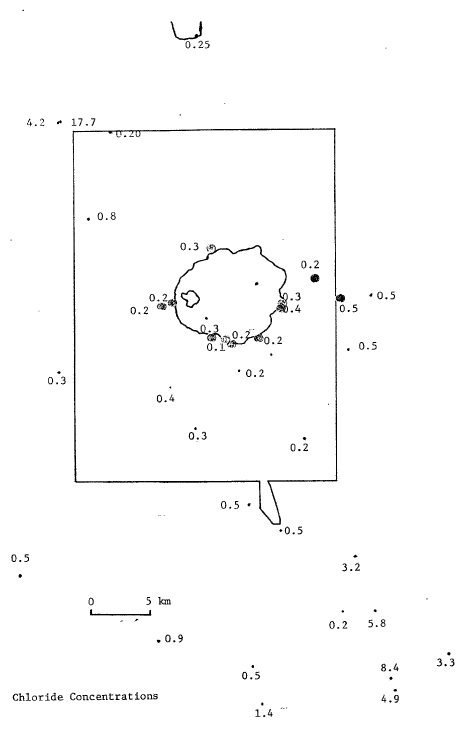 |
| Figure 2. Chloride concentrations (mg/L) in spring waters from the Crater Lake area. |
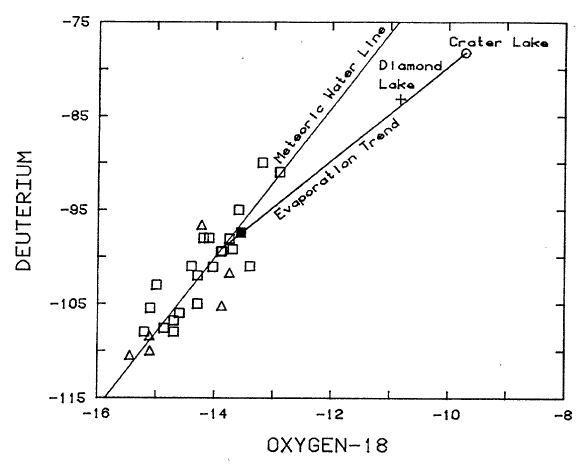 |
| Figure 3. Values for deuterium versus oxygen 18 isotopes for Crater Lake (average of 1983 values) and Diamond Lake and nearby cold springs. Springs above the elevation of the surface of Crater Lake shown as triangles; springs below the surface elevation shown as squares. Crater Spring shown by filled square. Meteoric water line is &D = 8 6j18 + 12 0/oo, which has a slightly different intercept than the meteoric water line of Craig (1961). The evaporation trend line has a slope of 5, which is similar to results for other lakes (Craig, 1961). |
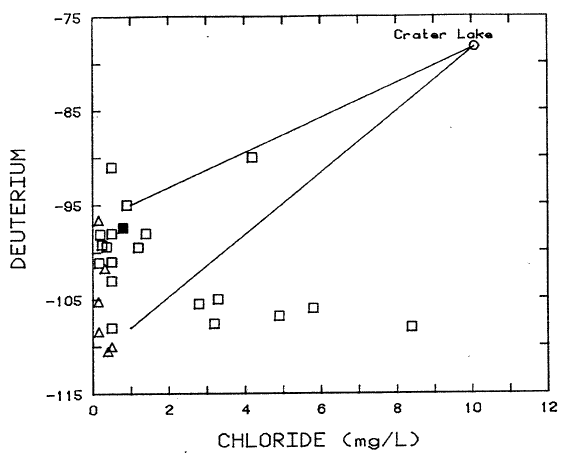 |
| Figure 4. Deuterium versus chloride concentration for Crater Lake (average of 1983 values) and nearby cold springs. Springs above the elevation of the surface of Crater Lake shown as triangles; springs below the surface elevation shown as squares. Crater Spring shown by filled square. Lines shown are for mixing Crater Lake water with the available range of deuterium isotopes in cold-spring waters. |
Crater Lake Water
Crater Lake can be characterized as being a low total-dissolved-solids, sodium-calcium-magnesium bicarbonate-chloride-sulfate water containing less than 1.0 mg/L boron and less than 0.1 mg/L lithium. Using the 1981 east basin samples (table lb) as an example, the concentrations of SiO2, Mg, Na, K, Li, HCO3, Cl, and F and conductivity are almost identical between surface and bottom waters, and the concentrations of Ca, S04 and B are approximately the same. The concentrations of any of these constituents usually do not vary by more than the error of the determination, which generally does not exceed 10 percent.
Using the 1981 east basin surface and bottom samples again, the deuterium values are essentially identical whereas the oxygen-18 values are nearly the same. The reported isotopic values do not vary by more than 2 standard deviations on replicate samples. These data clearly indicate that Crater Lake is well mixed (figures 5 – 9). This essentially constant composition of lake water as a function of depth is also observed in the 1983 and 1984 point samples. Yearly variation, most likely analytical error, between samples is shown in figure 9. As is observed from figure 3, Crater Lake water is not on the meteoric water line, but rather plots along an evaporation line having a slope of 5, which is typical of such waters (Craig, 1961). Diamond Lake also plots along this line.
Silica analyses of Crater Lake bottom and surface water samples in 1981, point samples collected from the east basin and the southwest basin at 50 m intervals to 300 m depth in 1983, and point samples collected from the southwest basin at about 100 m intervals to the bottom in 1984 all indicate Crater Lake is well mixed with respect to silica (figure 5 – 8). Published SiO2 values of Salinas and others (1984) for 1983 samples contained lower SiO2 concentrations compared to those reported in Larson (1984, Table 5) for his 1983 samples and found for our 1984 samples. For that reason the 1983 lake water samples were reanalyzed for SiO2 . The corrected values are reported in table lb; however, they may be questionable since the redeterminations were made in 1987. The source of this error in the original values is currently unknown and tentatively is considered to be analyst error. However, the chlorophyl and dissolved oxygen values reported by Salinas and others (1984) are correct. The corrected SiO2 values are similar to those reported by Larson (1984) and the 1984 samples of the lake water (table lb).
The degree of mixing of Crater Lake, as shown by major-ion chemistry and light stable isotopes, may be clarified using the tritium data of Simpson (1970) (figure 10). Except for the near-surface samples, the tritium content of the deeper lake water is constant at 24 TU from 50 m to total depth. In the seven months previous to the date of sampling the lake, the tritium concentration of precipitation averaged 171 TU. It seems likely that this recent precipitation is the source of the peak concentration of 31 TU (figure 10). Assuming that precipitation with 171 TU was added to the lake already at a tritium concentration of 24 TU to produce the peak concentration of 31 TU, the recent-precipitation would be diluted by 20 parts of low tritium-containing Crater Lake water. This much dilution cannot be detected by the other chemical or stable isotopic data that we have, because the techniques are not sensitive enough to show it. For example, precipitation with a chloride concentration of 0.2 mg/L added to 20 parts Crater Lake water with 10 mg/L chloride would have a resulting concentration of 9.5 mg/L. This small difference is well within the analytical uncertainty of chloride determinations.
Comparing Crater Lake water to other cold-spring waters and to Diamond Lake water, a lake about 20 km (12 miles) north of Crater Lake and 300 m (1000 ft) lower in elevation, Crater Lake has higher Cl, S04, HCO3, Ca, Mg, Na, Li, and B concentrations (table la and lb). Crater Lake, at such a high elevation, should contain either less chloride than a typical lower elevation lake and nearby cold springs or a similar chloride, but not more. Both lakes are significantly lower in dissolved SiO2 than surrounding cold-spring waters. For Diamond Lake, which is quite a productive lake, this is probably a result of diatom metabolism. For Crater Lake, diatoms also consume silica, but its silica concentration is actually anomalously high. The inflow of spring and ground water measured by Phillips (1968) is 15 percent of the total inflow to Crater Lake. Precipitation carries negligible silica whereas the cold springs above Crater Lake carry about 35 mg/L. Using the assumptions in Phillips (1968), the inflow from the cold springs would yield a silica concentration of only 7.5 mg/L in Crater Lake whereas the measured concentration is 18 mg/L. This extra silica must be provided by the same inflow that supplies the added chloride and sodium calculated by Nathenson (1987, written communication).
The anomalous constituents in Crater Lake led Van Denburgh (1968) to the interpretation that the enrichment of Cl and SO4, and perhaps SiO2 and Na, “… may have been contributed to the lake by thermal springs or fumaroles …” This suggestion, which is supported by the heat flow data of Williams and Von Herzen (1983), has caused much controversy. However, if the interpretation of Williams and Von Herzen’s heat flow data is correct, it provides a mechanism for the relatively uniform chemical and isotopic composition of the lake, namely Rayleigh convection. They reported a Rayleigh number of 6.3 x 10¹⁴, whereas 1000 is sufficient to initiate convection.
| |
| Table la. Chemical Analyses of Springs in the Vicinity of Mount Mazama |
| |
| Table 1b. |
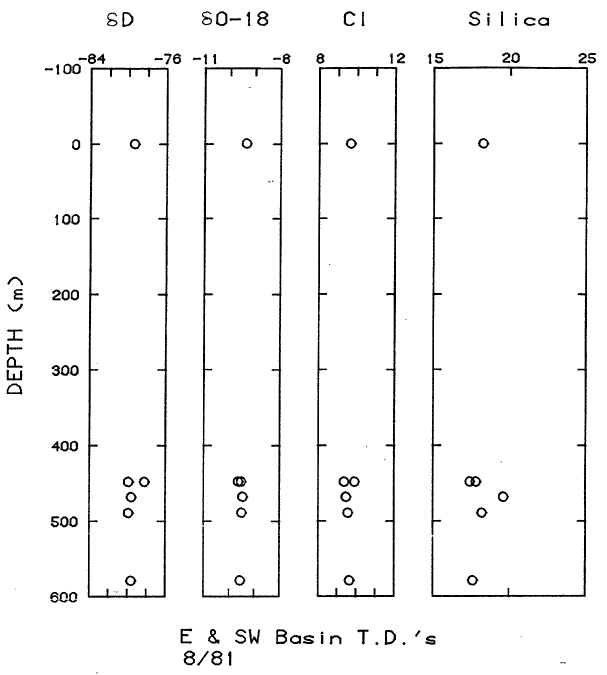 |
| Figure 5. Isotope and chemical data for Crater Lake for surface and total depth samples in 1981 in the east and southwest basins. |
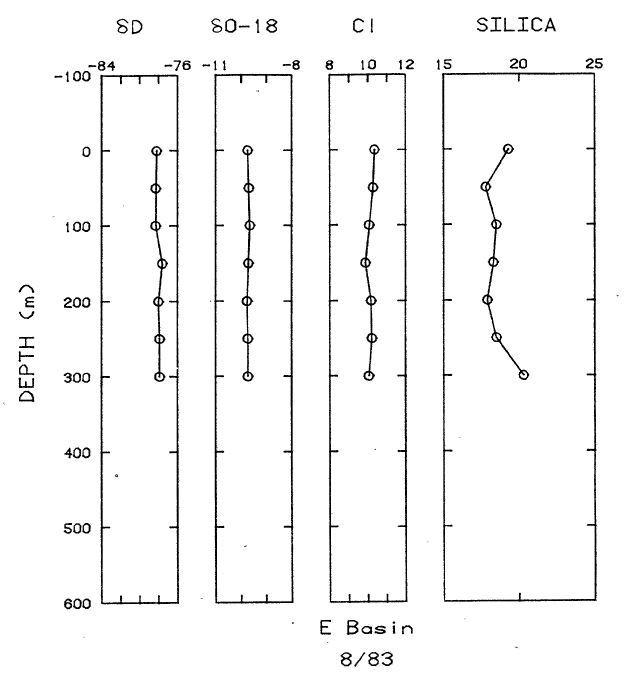 |
| Figure 6. Profile of isotope and chemical data for Crater Lake for the east basin in 1983. Silica values shown were redetermined in 1987, and the variation is not necessarily real. |
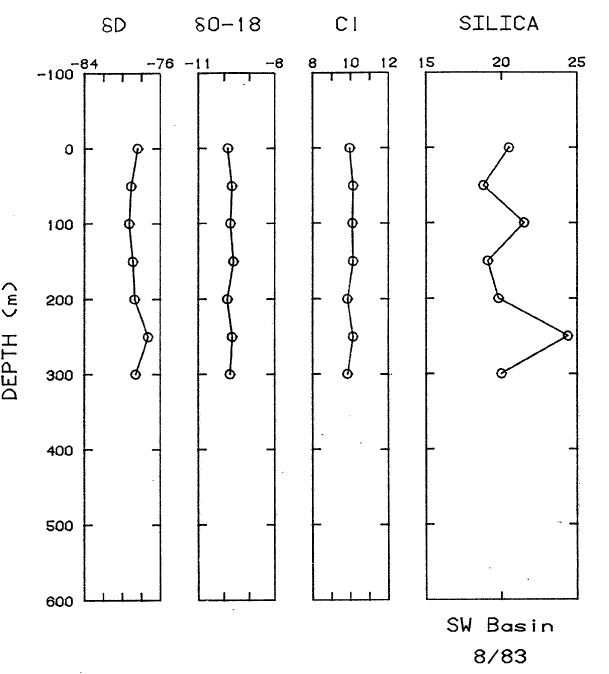 |
| Figure 7. Profile of isotfope and chemical data for Crater Lake for the southwest bas’in in 1983. Silica values shown were redetermined in 1987, and the variation is not necessarily real. |
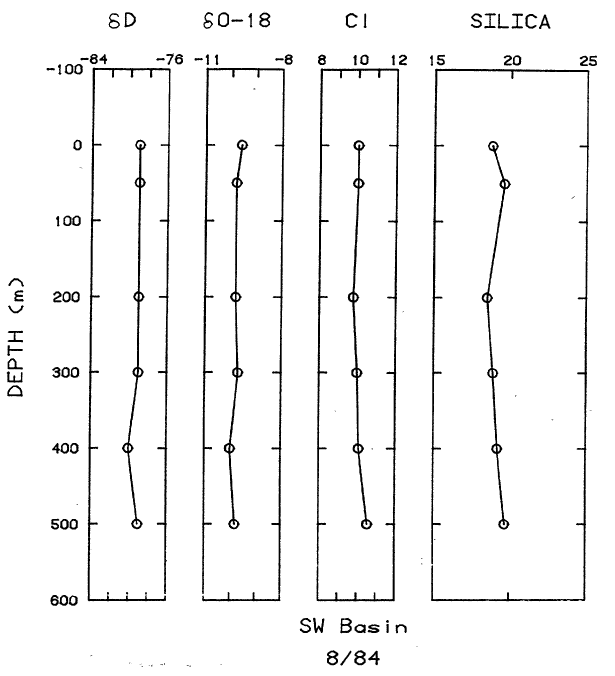 |
| Figure 8. Profile of isotope and chemical data for Crater Lake for the southwest basin in 1984. |
Chloride Analyses of Crater Lake Water
Because of inconsistencies in chloride values from two methods that became apparent when analyzing the last samples collected, we reanalyzed our Crater Lake water samples by at least two, and generally three, different methods for dissolved C1 (table 2). From the data in table 2, different analytical methods yield different Cl concentrations. Some measured C1 concentrations differ more than 1 mg/L.
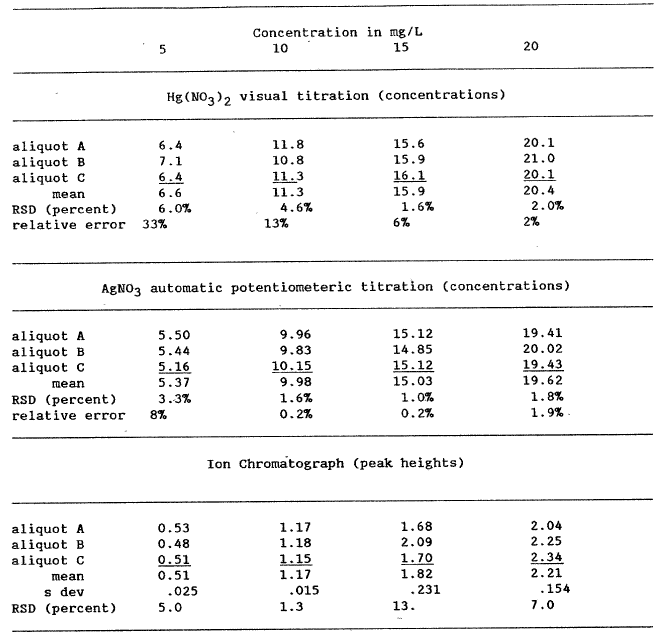
These determinations pointed out the requirement for more information on both the precision and accuracy of the chloride procedures followed. To address this analytical problem, we prepared two different experiments. The first was to reanalyze the 1981, 1983, and 1984 lake water samples using analytical techniques not initially employed. The second was to prepare four solutions containing 5, 10, 15, and 20 mg/L Cl and then to analyze each of the four solutions three times by each analytical method employed: ion chromatography, an automated AgN03 titration, and a manual Hg(N03)2 titration. The results of these analyses are reported in table 3.
To standardize the titrants for the two titration procedures, we used the method described by Fishman and Friedman (1985). After standardization of the titrant, the various standards were titrated 3 times and each individual concentration calculated (table 3). The mean and standard deviation are also reported in table 3. Because preparing standards for the ion chromatographic procedure is essentially a repeat of preparing the four standard Cl solutions, the error for this method was the variations in the peak heights. As can be observed from the RSDs calculated in table 3, some values are quite precise but others have significant variations.
The regression that passes nearest the origin using mean values is the ion chromatographic line, intercept a = -.014. Using the total data set, the best regression line is that for the automated AgNO3 titration, a = .545. Using the mean values, the Hg(N03 )2 titration has good overall precision, but the worst intercept, a = 2.08. The method of choice seems to be the automated AgNO3 titration because it is easy, rapid, and accurate. The Cl concentrations reported in table lb for Crater Lake water samples collected since 1982 were determined using the automated AgNO3 titration. The 1981 samples apparently evaporated too much for an adequate comparison.
Fishman and Pyen (1979) reported results of ion chromatographic (IC) and automated colorimetric (AC) Cl analyses for numerous surface waters. Assuming that the AC method is correct, the mean difference between the IC and AC is -0.76 (std. dev. = 1.30) for samples containing less than 20 mg/L C1. A similar comparison can be made for our 1983 Crater Lake data in table 2. Assuming the AgNO3 procedure is correct, the mean difference between methods is 0.95 (std dev = .34). This suggests a constant error of about 1 mg/L between the IC method and any other method.
|
|
Table 2. Chloride Analyses of Crater Lake Waters (Cone. in mg/L) |
 |
|
Table 3. Comparison of mercuric nitrate and silver nitrate titrations and ion chromatography determinations for chloride Concentration in mg/L |
Chemical Evidence of Thermal Components in Crater Lake Water
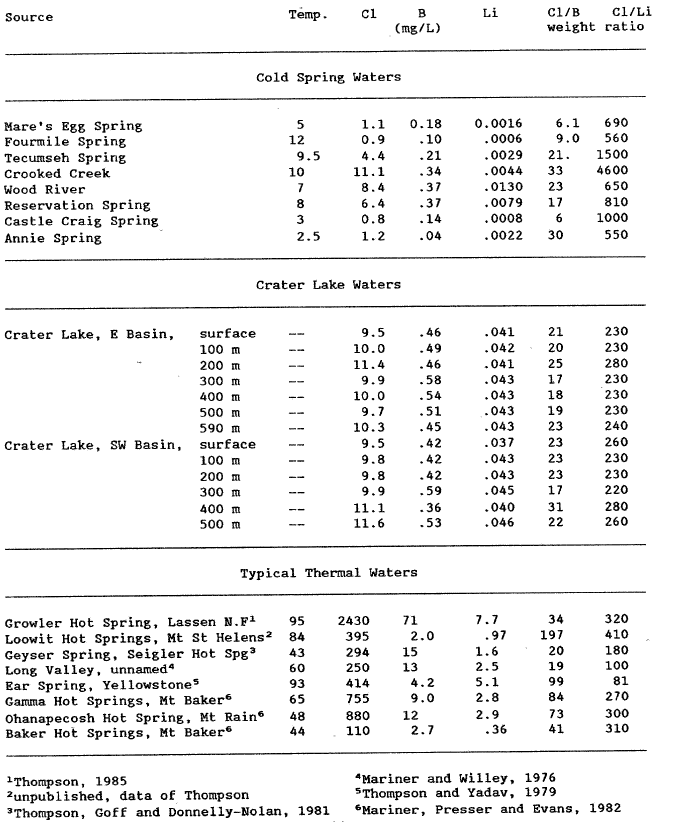
Elevated concentrations of boron and lithium are typically found in thermal waters of volcanic origin (e.g., White and others, 1976, Ellis and Mahon, 1977, p. 58-116). Because Crater Lake water is enriched in boron and lithium compared to local meteoric water and because the concentration of boron and lithium is either at or below the detection limit for these dissolved constituents in the cold spring waters, we evaporated water from 8 cold spring and 2 lake water profiles, collected at 100 m intervals, from 1 -liter to approximately 50 mL. This reduced volume was then analyzed for boron and lithium. The concentration of lithium and boron were then significantly above the detection limits and are reported in table 4.
The concentrations of boron (tables 1 and 4) in Crater Lake water is at least twice that of the cold-spring water, and the lithium concentration is at least 10 times that of the cold springs. If the chloride, boron, and lithium are derived from a thermal source, then the Cl/B and Cl/Li weight ratios would be expected to be similar to ratios from known hot springs in volcanic areas (table 4). Unfortunately, the cold water Cl/B ratios range from 6 to 33 and the lake water ratios range from 17 to 31. This overlap invalidates the use of the Cl/B ratio for identifying thermal components in the lake waters.
The Cl/Li ratio appears to be more diagnostic. In cold-spring waters the Cl/Li ranges from 540 to 4600, and in Crater Lake the ratio ranges from 220 to 280 (mean = 242, std. dev. = 20)(table 4). The Cl/Li weight ratio is substantially lower in lake water than in cold-spring water. Typical Cl/Li weight ratios for thermal waters from other volcanic areas range from 80 to 410 (mean = 246, std. dev. = 115)(table 4). The Crater Lake Cl/Li weight ratios are near the mean Cl/Li ratios for a variety of volcanic settings in the western United States. This also suggests that the additional chloride may be contributed by a thermal water.
Of the other anionic indicators of thermal waters, S04 and HCO3, S04 can arise from biogenic oxidation of sulfur and sulfides (Schoen, 1969; Schoen and Rye, 1970; and Brock and Mosser, 1975), and atmospheric C02 can also dissolve in the lake. We do not have the requisite isotopic data to determine the fraction of HCO3 and S04 contributed by this deep thermal fluid.
Crater Lake is a slightly alkaline (pH-7.5) sodium chloride-sulfate lake. This observation negates the possibility that acidic fumarolic gases such as HCl and H2S are being discharged into the lake bottom as was suggested by Van Denburgh (1968). If HC1 were being added to the lake, then the ionization of the HCI would make the lake acidic (pH<7). The oxidation of H2S, which generates sulfuric acid, also would tend to make the lake acidic. Thus, Na+ and Cl- appear to enter the lake together, probably dissolved in water. NaCl is not transported in a low temperature (t(150’C), low pressure (P<15 bars) gas. Additionally, the excess SiO2 discussed earlier suggests transport of SiO2 in water because little SiO2 is transported in a vapor phase.
| |
| Table la. Chemical Analyses of Springs in the Vicinity of Mount Mazama |
| |
| Table 1b. |
| |
| Table 4. Analyses of B and Li in partially evaporated samples of lake water collected in 1985, recalculated to original concentrations, and values for other western U. S. Hot Springs |
Conclusions
Compared to nearby cold springs and Diamond Lake to the north, Crater Lake has anomalously high concentrations of dissolved Na, Li, Cl, S04, and B. Additionally, the 6D and 6180 values for the lake water are significantly higher (heavier) than for cold-spring waters. The isotopic difference between lake water and cold-spring water is caused by evaporation. The water isotopes, SD and 6180, determine an evaporation line between Annie Spring and Crater Lake water having a slope of five, which is typical for evaporated waters. Diamond Lake also plots along this evaporation line. The chemical enrichments in Crater Lake, however, cannot be explained by evaporation.
No one spring was identified as being the outlet of Crater Lake. We see no evidence for any spring containing more than ten percent lake water. Crater Spring in the NW part of the park (see figure 1 and 2) may contain some Crater Lake water. The evidence for this is that Crater Spring plots along a mixing line between Crater Lake water and the meteoric water line and also that it contains some Cl and plots along a 6D – Cl mixing line between Crater Lake and dilute spring waters. If Crater Spring does contain Crater Lake water, it cannot contain more than seven percent lake water. Oasis Spring, in the same vicinity, may also contain some Crater Lake water.
Crater Lake appears to be well mixed based on chemical and isotopic analyses. The concentrations of SiO2, Cl, Na, Li, SO4, and B do not vary significantly as a function of depth. The 6D and 6180 values are remarkably uniform throughout the lake water. Tritium data indicate that recent precipitation rapidly mixes with many volumes of lake water in the near surface. The heat flow values reported by Williams and Von Herzen (1983) are sufficient to cause small density gradients that allow the lake to convect in the deeper levels. This Rayleigh convection is apparently able to mix the lake water thoroughly over a 1-year period because there are no major ion chemical gradients found in Crater Lake (Simpson, 1970).
Thermal water generally contains moderate to high concentrations of dissolved boron, chloride, and lithium. Crater Lake also appears to have an anomalously high Li concentration compared to other waters in this area. As is observed from table la and table 4, other cold springs can have somewhat elevated chloride concentrations and similar Cl/B weight ratios thus negating their overall usefulness. The Cl/Li weight ratio may be useful in assessing if the Cl is also derived from a thermal water. The mean Cl/Li weight ratio for Crater Lake is calculated to be 242, which is comparable to thermal waters from volcanic environments, 81 – 410, and is substanially lower than the lowest cold-spring ratio (550) at Annie Spring. This supports the hypothesis that Crater Lake contains thermal water and also explains the elevated Ma, Li, Cl, S04, and B concentrations. With the present data it is not possible to assess a) the amount of, b) the temperature of, or c) the composition of this inferred thermal water.
|
|
Table 4. Analyses of B and Li in partially evaporated samples of lake water collected in 1985, recalculated to original concentrations, and values for other western U. S. Hot Springs |
 |
|
Figure 1. Locations of spring samples’ in-the Crater Lake-area. Large dots show spring locations that are higher in altitude than the surface of Grater Lake. Numbers around Crater Lake are last two digits of sample number series JCL 81-. |
|
|
Figure 2. Chloride concentrations (mg/L) in spring waters from the Crater Lake area. |
References
Bacon, C. R., 1983, Eruptive history of Mount Mazama and Crater Lake caldera, Cascade Range, U.S.A.: Journal of Volcanology and Geothermal Research, vol. 18, p. 57-115.
Bigeleisen, J., Perlman, M. L., and Prosser, H. C., 1952, Conversion of hydrogenic materials to hydrogen for isotopic analysis: Analytical Chemistry, vol. 24, p. 1356-1357.
Brock, T. D., and Mosser, J. L., 1975, Rate of sulfuric-acid production in Yellowstone National Park: Geological Society of America Bulletin, vol. 86, p. 194-198.
Brown, Eugene, Skougstad, M. W., and Fishman, M. J., 1970, Methods for collection and analysis of water samples for dissolved minerals and gases: Techniques of Water-Resources Investigations of the U. S. Geological Survey, Book 5, Chapter Al, 160 p.
Craig, Harmon, 1961, Isotopic variations in meteoric waters: Science, vol. 133, p. 1702-1703.
Ellis, A- J., and Mahon, W. A. J., 1977, Chemistry and Geothermal Systems: Academic Press, New York, 392 p.
Epstein, S., and Mayeda, T., 1953, Variations of the 180 contents of waters from natural sources: Geochimica et Cosmochimica Acta, vol. 4, p. 213-224.
Fishman, M. J., and Friedman, L. C., 1985, Methods for determination of inorganic substances in water and fluvial sediment: Techniques of Water-Resources Investigations of the United States Geological Survey, Book 5, Chapter Al: U.S. Geological Survey Open-File Report 85-495, p. 211-228.
Fishman, M. J., and Pyen, Grace, 1979, Determination of selected anions in water by ion chromatography: U.S. Geological Survey Water-Resources Investigations 79-101, 30 p.
Gonfiantini, Roberto, 1986, Environmental isotopes in lake studies, in Handbook of Environmental Isotope Geochemistry, P. Fritz and J. Ch. Fontes, editors: Elsevier Scientific Publishing Company, Amsterdam, The Netherlands, vol. 2, p. 113-168.
Junge, C. E., and Werby, R. T., 1958, The concentration of chloride, sodium, -potassium, calcium, and sulfate in rain water over the United States: Journal of Meteorology, vol. 15, p. 417-425.
Larson, D. W., 1984, Second annual report on the limnology and water quality monitoring program at Crater Lake National Park, Oregon: National Park Service Pacific Northwest Region, Seattle, 108 p.
Mariner, R. H., Presser, T. S., and Evans, W. C., 1982, Chemical and isotopic composition of water from thermal and mineral springs of Washington: U.S. Geological Survey Open-File Report 82-98, 18 p. p. 10
Mariner, R. H., and Willey, L. M., 1976, Geochemistry of thermal waters in Long Valley, Mono County, California: Journal of Geophysical Research, vol. 81, p. 792-800.
Phillips, K. N., 1968, Hydrology of Crater, East, and Davis Lakes, Oregon: U.S. Geological Survey Water-Supply Paper 1859-E, 60 p.
Salinas, John, White, L. D., and Thompson, J. M., 1984, Studies on chemical, isotopic, and limnological parameters of Crater Lake, Oregon (abs): Eos, vol. 65, p. 885.
Schoen, Robert, 1969, Rate of sulfuric acid formation in Yellowstone National Park: Geological Society of America Bulletin, vol. 80, p. 643-650.
Schoen, Robert, and Rye, R. O., 1970, Sulphur isotope distribution in solfataras, Yellowstone National Park: Science, vol. 170, p. 1082-1084.
Shapiro, Leonard, and Brannock, W. W., 1956, Rapid analysis of silicate rocks: U.S. Geological Survey Bulletin 1036C, 56p.
Simpson, H. J., 1970, Tritium in Crater Lake, Oregon: Journal of Geophysical Research, vol. 75, p. 5195-5207.
Thompson, J. M., 1975, Selecting and collecting thermal springs for chemical analysis: A method for field personnel: U.S. Geological Survey Open-File Report 75-68, 11 p.
Thompson, J. M., 1985, Chemistry of thermal and nonthermal springs in the vicinity of Lassen Volcanic National Park: Journal of Volcanology and Geothermal Research, vol. 25, p. 81-104.
Thompson, J. M., Goff, F. E., and Donnelly-Nolan, J. M., 1981, Chemical analyses of waters from springs and wells in the Clear Lake volcanic area in R. J. McLaughlin and J. M. Donnelly-Nolan (editors), Research in the Geysers – Clear Lake Geothermal Field, Northern California: U.S. Geological Survey Professional Paper 1141, p. 183-191.
Thompson, J. M., and Yadav, Sandhya, 1979, Chemical analyses of waters from geysers, hot springs, and pools in Yellowstone National Park, Wyoming, from 1974 to 1978, U.S. Geological Survey Open-File Report 79-704, 49 p.
Thompson, J. M., and White, L. D., 1983, Does Crater Lake, Oregon, have a discernible outlet?-(abs): Eos, vol. 64, p. 895.
Van Denburgh, A. S., 1968, Chemistry of the Lakes, in Hydrology of Crater, East, and Davis Lakes, Oregon: U.S. Geological Survey Water-Supply Paper 1859-E, p. 41-45.
White, D. E., Thompson, J. M., and Fournier, R. O., 1976, Lithium contents of thermal and mineral springs, in J. D. Vine (editor), Lithium Resources and Requirements by the Year 2000: U.S. Geological Survey Professional Paper 1005, p. 58-60.
White, L. D., Thompson, J. M., and Maley, C. A., 1985, Evidence for thermal water in Crater Lake, Oregon (abs): Eos, vol. 66, p. 1146.
Williams, D. L., and Von Herzen, R. P., 1983, On the terrestrial heat flow and physical limnology of Crater Lake, Oregon: Journal of Geophysical Research, vol. 88, p. 1094-1104.
Other pages in this section